
Supplement Swaps for a Low-Tox Lifestyle
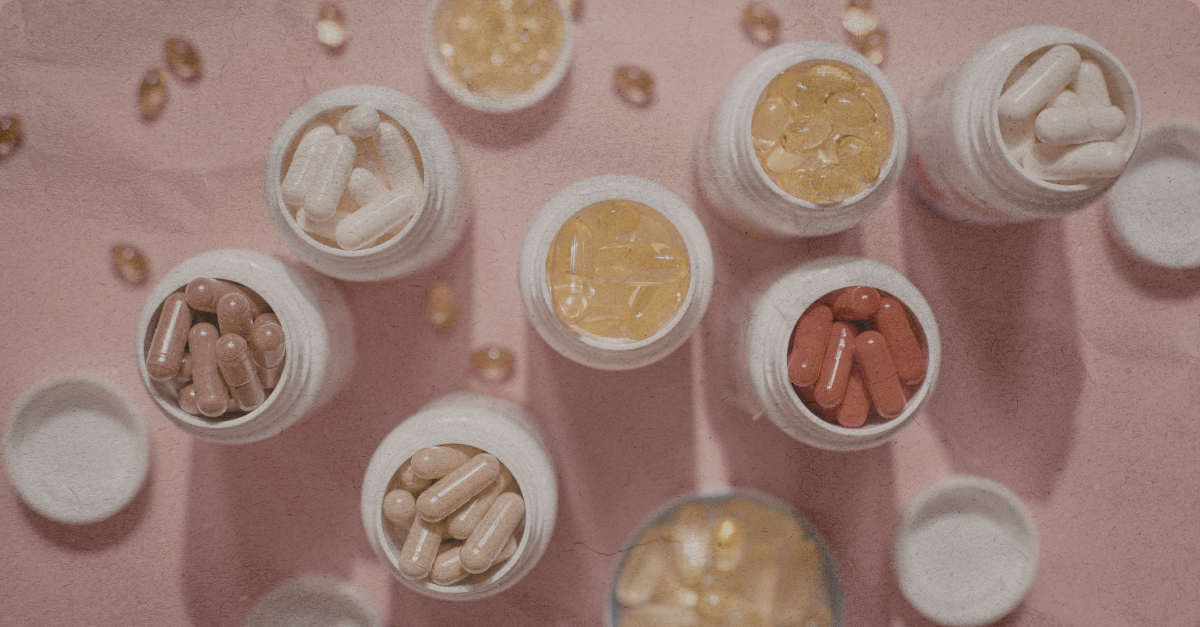
Low-tox living usually starts with swapping conventional cleaners for vinegar and baking soda. Then you start to filter your water. Then it’s time to replace nonstick cookware, rethink skincare, upgrade air quality, and slowly remove the things that don’t belong in your home or on your body.
But one area we often don’t think about swapping out is our supplements.
They’re taken daily and absorbed internally. And yet, many people who carefully curate a low-tox lifestyle never pause to examine what’s actually inside the capsules they swallow every morning. And it matters, because supplements are taken daily, absorbed internally, and often overlooked in conversations about chemical load.
🎧 Prefer to Listen?
Reading’s great, but sometimes it’s nice to just listen in. So we turned today’s blog into a conversation. Our two AI sidekicks, Max and Chloe, break down today’s blog so you can listen on the go!
The Hidden Additives in Most Supplements
Most conventional supplements are formulas built around synthetic isolates, combined with binders, fillers, flow agents, stabilizers, artificial colors, and coatings designed to improve shelf life or manufacturing efficiency.
“Lab-made” doesn’t automatically mean harmful. Synthetic nutrients can be useful and, in some cases, a must-have.
But they often introduce compounds that low-tox consumers intentionally avoid elsewhere.
Magnesium stearate, titanium dioxide, artificial dyes, and polymer-based coatings are common examples of synthetic ingredients that aren’t the best for us.
Research has shown that excipients, the so-called “inactive” ingredients in pills and capsules, are not always biologically inert and can affect absorption, digestive tolerance, and individual response.
There’s also a meaningful difference between isolated nutrients and those consumed within a whole-food matrix. Studies comparing synthetic vitamins to food-derived forms suggest that bioavailability and physiological response can vary depending on how nutrients are delivered.
Low-Tox Living is About Cumulative Load
Most women who prioritize low-tox choices understand that exposure adds up. Endocrine disruptors, environmental chemicals, and synthetic compounds don’t exist in isolation. They accumulate through water, air, personal care products, food packaging, and daily habits.
Research on endocrine-disrupting chemicals highlights the importance of cumulative exposure, especially when small doses come from many different sources over time.
That same logic applies to what we ingest, too.
If you’re filtering water, choosing organic bedding, and avoiding harsh chemicals on your skin, it makes sense to apply similar standards to what you ingest for nutritional support.
Why Beef Organ–Based Nutrition is a Clean Swap
Beef organ–based nutrition offers a fundamentally different approach. Instead of isolating single nutrients in a lab, organ supplements are derived from whole foods that humans have consumed for generations.
Organs like the liver, heart, kidney, and spleen are among the most nutrient-dense foods available, naturally rich in bioavailable vitamins, minerals, peptides, and cofactors.
What makes this approach compelling for low-tox living is not just nutrient density, but how the body recognizes and uses those nutrients.
Nutrients arrive in their natural ratios, accompanied by the compounds that support absorption and utilization.
When properly sourced and minimally processed, organ-based supplements function less like pills and more like concentrated food.
What to Look for in a Low-Tox Supplement Swap
Not all organ supplements are created equal. Look for products made from grass-fed, pasture-raised animals, with short ingredient lists and no synthetic binders or fillers.
Most importantly, choose brands that clearly communicate sourcing, processing, and testing, rather than relying on vague “natural” claims.
A Natural Extension of Clean Living
If low-tox living is about supporting the body while reducing unnecessary chemical load, then whole-food supplements make sense. They bring nutrition back to its origins, offering foundational support without introducing ingredients your lifestyle already works to avoid.
Sometimes the cleanest swap isn’t something new. It’s something simpler.
Support your body with real-food nutrition using Sarenova’s Formula No. 06.
💡 Key Takeaways
Many people curate a low-tox lifestyle everywhere except the supplements they take and absorb daily.
So-called “inactive” synthetic ingredients in supplements can affect absorption, tolerance, and biological response.
Low-tox living isn’t about one exposure, but the cumulative load your body processes over time.
Beef organ–based nutrition delivers bioavailable vitamins in a natural whole-food matrix the body recognizes.
The cleanest supplement swap prioritizes grass-fed, pasture-raised sourcing with no unnecessary fillers.
-
(AI-generated conversation and transcript)
Replace_Synthetic_Multivitamins_With_Beef_Liver
[00:00:00] Okay, let's unpack this. If you've been listening to us for a while, or you know, if you've just been on the internet in the last five years, you know the drill.
[00:00:06] Oh, I think I know where you're going with this.
[00:00:08] You start this journey. Let's call it the low tox rabbit hole. Usually by accident you read one terrifying article about bleach and the next thing you know your house smells like a salad dressing factory because everything is cleaned with vinegar.
[00:00:23] It is the classic gateway, isn't it? The vinegar phase?
[00:00:27] It's the vinegar phase, and it just spirals. You start side eyeing your tap water, so you buy the expensive filter.
[00:00:32] Yep.
[00:00:33] You realize. Your non-stick pan is basically seasoning your eggs with Teflon. So you switch to cast iron, you swap the deodorant, the laundry detergent, the shampoo.
[00:00:43] You're like meticulously curating your environment to lower that chemical burden on your body,
[00:00:48] which is a completely rational response. I mean, we're living in a chemical soup that just didn't exist a hundred years ago.
[00:00:53] Exactly.
[00:00:54] So controlling what you can control is the smart play.
[00:00:57] Exactly, but, and [00:01:00] here's where it gets really interesting and honestly a little frustrating.
[00:01:04] There is this massive blind spot.
[00:01:06] Hmm.
[00:01:07] We do all this work. We filter the water, we buy organic kale, and then every single morning we open a plastic bottle and pop a pill, a multivitamin, a mineral, whatever. And we just swallow it without a second thought.
[00:01:19] It's a fascinating cognitive dissonance really.
[00:01:23] We'll scrutinize the ingredients on a bottle of floor cleaner.
[00:01:26] Yes.
[00:01:27] More than we scrutinize what's in the capsule. We are literally putting inside our digestive tract.
[00:01:32] So today's deep dive is, uh, all about that pill. Mm-hmm. We're gonna tear apart what is actually in your supplement cabinet. We're talking about cumulative load.
[00:01:41] Yes. The difference between a nutrient made in a lab versus one from, you know, a whole food
[00:01:45] and why the solution might involve. Eating something that, uh, let's be honest, most of us would probably run away from at a dinner party.
[00:01:51] We are gonna talk about organs.
[00:01:53] We are definitely gonna talk about organs
[00:01:55] before we get to the, uh, liver and onions of it all.
[00:01:57] I wanna start with the capsule itself. I was looking through [00:02:00] the source material you sent over, and I have to admit, I felt a little. Betrayed. I assume the vitamin C capsule was well, vitamin C,
[00:02:10] right.
[00:02:10] Maybe some gelatin for the shell.
[00:02:12] Right.
[00:02:12] But the list of other ingredients is longer than the active ones.
[00:02:16] Yeah, and that's, that's just the industry standard. Unfortunately. We have to understand is that the supplement industry is, well first and foremost, it's a manufacturing industry. They're running these high speed machines. That need to punch out tens of thousands of capsules per hour.
[00:02:32] Right.
[00:02:32] And pure vitamins.
[00:02:34] These pure nutrient powders, they don't behave well in those machines. They clump, they stick, they clog up the gears. So to make the machine run smoothly, manufacturers add what are called excipients.
[00:02:44] Excipients.
[00:02:45] Yeah. And they're legally classified as inactive ingredients. But that term is, well, it's incredibly misleading.
[00:02:51] So inactive just means it doesn't count as a vitamin,
[00:02:54] right?
[00:02:54] Yeah. It doesn't mean it doesn't interact with your body.
[00:02:56] Precisely take magnesium steering. It's one [00:03:00] of the most common flow agents. It's essentially a lubricant.
[00:03:03] A lubricant.
[00:03:03] It makes the powder slippery so it flies into the capsule without jamming the machine.
[00:03:07] Okay, but. Playing devil's advocate here, if there's a tiny bit of lubricant in my pill, does it really matter? I mean, we aren't eating a bowl of it. Is this alarmist or is there a real physiological cost?
[00:03:20] That is a valid question. The dose makes the poison right, but here's the nuance. Magnesium steroid is.
[00:03:26] A, well, it's a chalky substance in the industrial world. It's used to prevent things from sticking together.
[00:03:33] Okay.
[00:03:33] When you ingest it, even in small amounts, there's evidence suggesting it can form a sort of biofilm like barrier in your intestines,
[00:03:41] a barrier. So it's literally coating my gut
[00:03:43] potentially.
[00:03:43] And that coating can actually inhibit the absorption of the very nutrients you're trying to take.
[00:03:48] Wait, what?
[00:03:49] You're swallowing the pill to get the vitamin, but the so-called inactive ingredient holding it together might be preventing you from absorbing that vitamin
[00:03:56] That is just,
[00:03:57] yeah,
[00:03:57] it's the definition of irony.
[00:03:59] You're paying for [00:04:00] expensive urine,
[00:04:00] it gets worse. Some research indicates that these steroids can suppress T-cell function, which is part of your immune system in the gut.
[00:04:08] Oh man.
[00:04:08] So you're taking a supplement to boost your health, but the delivery system is introducing this low level irritant, and that's just one additive.
[00:04:16] We haven't even touched on titanium dioxide.
[00:04:18] I saw that on the list. Isn't that the stuff that you use in like house paint?
[00:04:21] It's a whitener. It's used to make the pill look. Clean and white and pharmaceutical. But the European Food Safety Authority has actually flagged titanium dioxide as no longer safe for consumption.
[00:04:33] Oh. Way
[00:04:33] because it can accumulate in the body and potentially damaged DNA, yet it is still in a huge number of health supplements in other markets.
[00:04:42] So we have lubricants for robots and paint for walls, and then there were the fillers. I was reading about malrin and cornstarch being used just to. Bulk things up,
[00:04:51] right?
[00:04:51] If the active dose of a vitamin is tiny, we're talking micrograms. You can't sell an empty looking capsule. Mm-hmm. So they fill the space often with cheap, you know, [00:05:00] genetically modified corn derivatives.
[00:05:02] Which brings us to the actual nutrients.
[00:05:04] Mm-hmm.
[00:05:05] Because even if we stripped away all the lubricants in the paint, we still had to talk about what the vitamin actually is.
[00:05:11] And this was a huge aha moment for me in the reading. The difference between a synthetic isolate and a whole food matrix.
[00:05:18] This is so critical. Most people think vitamin C is ascorbic acid. They think those words are interchangeable.
[00:05:24] They're not,
[00:05:24] not in nature. No. Ascorbic acid is just the outer shell, the antioxidant.
[00:05:30] Wrapper, if you will, of the entire vitamin C complex in an orange. That ascorbic acid comes attached to bioflavonoids, rootin, all these different factors and enzymes. It's a complex orchestrated package.
[00:05:42] Okay. I like analogies. So if whole food, vitamin C is a car, engine wheels transmission, the whole thing.
[00:05:47] Yeah. Then ascorbic acid is just. The key.
[00:05:50] The key is a great way to put it. It's a vital part of the hole, but it can't drive you to the store by itself. When you synthesize ascorbic acid in a lab, usually by [00:06:00] processing GMO corn syrup with harsh chemicals like acetone, you're just creating an isolate. It's chemically identical to that one molecule in nature, but it's completely stripped of all its context.
[00:06:11] And here's where I got stuck in the notes. The source material argues that taking these isolates isn't just less effective, but that it can actually be taxing on the body. How does taking a vitamin take away from your health?
[00:06:24] Well, think about it this way. Your body recognizes that ascorbic acid is supposed to be part of a complex.
[00:06:30] It knows it needs other co-factors like copper specific enzymes to utilize it properly.
[00:06:36] Okay?
[00:06:37] If the pill doesn't provide them, the body has to scavenge them from its own internal reserves.
[00:06:41] Wait, hold on. So to process the synthetic vitamin, my body has to rob its own bank vault.
[00:06:45] Exactly. It's sometimes called a negative nutrient effect.
[00:06:49] You're essentially creating a deficiency in one area to process a surplus in another. You might boost your blood levels of ascorbic acid. Sure. But you could be depleting your copper reserves or stressing your liver in the [00:07:00] process.
[00:07:00] That completely flips the script. We take these things as an insurance policy, but the premiums might actually be higher than the payout.
[00:07:08] That's a perfect way to put it.
[00:07:09] Yeah.
[00:07:09] Nature doesn't produce isolates. You'll never find a tree that grows pure ascorbic acid powder.
[00:07:16] Right. You find fruit.
[00:07:17] You find fruit. The body evolved over millions of years to interact with the food matrix, not the chemical isolate.
[00:07:24] This leads us to the broader concept that kept popping up in the research cumulative load.
[00:07:29] Because I can hear the skeptics listening right now thinking, okay, sure, maybe my multivitamin isn't perfect, but is it really gonna kill me?
[00:07:36] And it's not about one pill killing you. It's the bucket theory.
[00:07:40] Walk us through the bucket.
[00:07:41] Okay, so imagine your body has a bucket for processing toxins.
[00:07:46] Mm.
[00:07:46] Every single day you're pouring things into it.
[00:07:48] You wake up, brush your teeth, maybe there's fluoride drop,
[00:07:51] you drink water trace pharmaceuticals or chlorine drop.
[00:07:55] You touch a receipt printed on thermal paper, BPA drop, you breathe city air. [00:08:00] Drop
[00:08:00] and stress. Cortisol is filling that bucket too.
[00:08:04] Absolutely. Now your liver and kidneys are the drain at the bottom of the bucket.
[00:08:08] They're constantly trying to empty it, but in modern life, that faucet is just running full blast. When you add a supplement full of synthetic fillers, artificial colors, and these isolated chemicals, you are voluntarily adding more drops to a bucket that is likely. Already close to overflowing.
[00:08:25] That's the kicker for me.
[00:08:26] Yeah.
[00:08:27] We can't always control the air quality on our commute. We can't always avoid the thermal paper receipts, but the supplement is something we choose. Yeah. We pay money for it. We put it in our mouths on purpose.
[00:08:38] Exactly. If you're living a low tox lifestyle, the whole goal is to close the faucets. You can actually reach.
[00:08:44] Why would you leave the supplement faucet running? It just counteracts the good work you're doing everywhere else.
[00:08:49] So let's pivot to the solution. Because the sources present a solution that is Well, it's old school.
[00:08:56] Yeah,
[00:08:56] very old school. We aren't talking about some new high tech molecule. [00:09:00] We are talking about beef organs.
[00:09:01] Yes. We are going back to the beginning,
[00:09:03] and I have to be real with you and I think I speak for a lot of listeners. The idea of eating organ meats has a massive ick factor for me. I did not grow up eating liver and onions, the texture, the metallic taste. It's a hard sell.
[00:09:17] It is for modern palates, for sure.
[00:09:19] Right.
[00:09:19] But culturally and historically, that is a total anomaly for most of human history. The muscle meat, the steak, the chicken breast, that was the scraps.
[00:09:29] Really.
[00:09:29] The organs were the prize predators in the wild eat the liver first. Indigenous cultures prioritized organs for pregnant women and for their hunters.
[00:09:37] Why? What did they know that we forgot?
[00:09:39] They knew intuitively that it was where the vitality lived. And nutritionally they were absolutely right. The liver is often called nature's multivitamin, but even that kind of undersells it
[00:09:49] uhhuh,
[00:09:49] it is the most nutrient dense food on the planet. Bar none
[00:09:53] more than kale.
[00:09:54] More than blueberries.
[00:09:55] By a landslide, you have preformed vitamin A, which is retinol. That's crucial because [00:10:00] many people can't genetically convert the betacarotene and carrots into usable vitamin A.
[00:10:04] Right?
[00:10:04] You have he iron B12, folate, choline, coq 10,
[00:10:08] and going back to our earlier point, these are all in that whole, whole food matrix.
[00:10:12] Correct? They're packaged with the exact peptides and enzymes. Your body needs to absorb them. You aren't robbing the body to use them. You're flooding the body with completely usable resources.
[00:10:23] So the argument is to stop taking the synthetic isolate made from corn syrup and start taking the actual concentrated food source.
[00:10:31] But again, the taste. I am not gonna start frying up liver every morning. I know myself I won't do it,
[00:10:38] and that is where the clean swap comes in. The source material highlights, freeze dried organ supple. Specifically they point to SAR Nova's Formula oh six,
[00:10:47] right anova? I looked into this specific one because I wanted to know why this horses picked it.
[00:10:52] I mean, there are a lot of liver pills out there. You can buy 'em at the gas station next to the energy drinks.
[00:10:56] Please never buy supplements at a gas station. The gas station sushi rule applies to [00:11:00] vitamins two.
[00:11:00] Noted. So what makes Formula no. Oh six the case study here.
[00:11:05] It all comes down to sourcing and processing.
[00:11:08] Remember, the liver is a filter. It processes toxins. So if you eat the liver of a cow that lived on a feedlot, ate GMO corn and was pumped full of antibiotics,
[00:11:18] you're eating a filter clogged with toxins. You're eating the very things you're trying to avoid.
[00:11:23] You got it. So the non-negotiable criteria has to be.
[00:11:26] Grass fed, grass finished, pasture raised. The animal has to be healthy for the organ to be healthy. ANOVA sources from New Zealand are these regenerative farms where the animals are roaming free.
[00:11:37] Okay, so a clean source. What about all those inactive ingredients we were trashing earlier?
[00:11:42] That's the other half of the equation.
[00:11:44] A truly high quality organ supplement should have essentially no ingredient list. It should say beef, liver, and gelatin capsule. That's it.
[00:11:52] Nothing else.
[00:11:53] No magnesium ster, no silica, no flow agents.
[00:11:56] Is that harder to manufacture?
[00:11:57] Much harder. It means they have to run their [00:12:00] machines slower. It means they can't mass produce millions of units as cheaply.
[00:12:04] It's a real commitment to quality over just efficiency.
[00:12:09] And the processing method matters too, right?
[00:12:10] Yeah.
[00:12:11] You mentioned freeze drying.
[00:12:12] Yes. If you cook liver, you destroy some of the heat sensitive nutrients. Freeze drying just removes the water, but preserves the biological structure of the vitamins and enzymes.
[00:12:22] It's basically raw food, just shelf stable and put in a capsule for you.
[00:12:26] So for the user, it's just a pill. You swallow it, you don't taste it. Mm-hmm. But biologically, you just hate a steak. Dinner's worth of B12
[00:12:33] precisely. It bridges that gap. You get the ancestral nutrition without having to convince your family to eat kidney pie,
[00:12:40] which is a win for everyone involved.
[00:12:42] Yeah.
[00:12:42] I wanna circle back to the cumulative load idea one last time. Because swapping a multivitamin for beef liver might feel like a small thing, but in the context of a low tox life, how big of an impact does this actually have?
[00:12:55] I think it's significant because of consistency. Think about the signal you're sending your body every [00:13:00] day.
[00:13:00] If you're introducing these synthetic foreign compounds, your immune system is constantly on this low level alert. What is this? Do I need to attack it? How do I process it?
[00:13:09] It's like leaving a background app, running on your phone that just drains the battery all day.
[00:13:13] Yes, that's a perfect analogy. By switching to a whole food organ-based source, you are stopping that battery drain.
[00:13:21] You're giving the body something, it recognizes instantly, oh, this is food. I know exactly what to do with this. It frees up so much energy for repair, for digestion, for thinking,
[00:13:32] and that's really the goal of all of this, isn't it?
[00:13:34] Yeah.
[00:13:35] We aren't trying to be perfect for the sake of some scorecard. We just want feel good.
[00:13:39] We want energy.
[00:13:40] Right. The low tox lifestyle isn't about fear. It shouldn't be about being terrified of every chemical. It's about alignment. It's about aligning your daily habits with your biology and biological organisms thrive on whole foods, not synthetic isolates.
[00:13:54] It's funny, we spend so much time looking for the new breakthrough in.
[00:13:58] The new peptide, the new hack, [00:14:00] and so often the answer is just what we used to do for thousands of years, but we forgot.
[00:14:04] Innovation is great, but sometimes progress leads us away from the fundamentals. The cleanest swap is often the simplest one.
[00:14:10] So for the listener who is standing in their kitchen right now looking at their supplement cabinet with the new found census suspicion.
[00:14:17] What is the first step?
[00:14:18] Turn the bottles around. Ignore all the fancy marketing on the front. Ignore the doctor. Recommended stamp. Just look at the other ingredients list at the very bottom.
[00:14:27] Let then print.
[00:14:28] If you see words that look like they belong in a chemistry set, titanium stare at lake dies. Ask yourself, why am I eating this?
[00:14:37] And then consider if there's a whole food version of that nutrient.
[00:14:40] And if you're brave enough to try the organ route. Look for that quality grass fed, no fillers. Whether it's Sernova or another brand that meets those strict standards, just don't compromise on the source.
[00:14:52] Your body will absolutely know the difference.
[00:14:55] I wanna leave everyone with a thought to mull over today. It's something that really stuck with me while preparing for [00:15:00] this. We spend so much energy worrying about what we put on our bodies, the paraben-free lotions, the aluminum free deodorants. We worry about what is around our bodies, the EMFs, the air quality.
[00:15:11] Mm-hmm.
[00:15:12] We have become incredibly trusting, maybe too trusting of the things we put in them just because they're sold in a bottle that says health.
[00:15:18] It is the ultimate Trojan horse.
[00:15:20] Maybe it's time to treat our supplement cabinet with the same scrutinies as our cleaning cabinet, because if you wouldn't watch your face with it, why in the world are you eating it?
[00:15:29] Couldn't have said it better myself.
[00:15:30] Thanks for diving in with us. Stay curious. Read your labels and we'll catch you on the next one.
[00:15:36] Good eye.