
Why Herbs and Organs Work Better Together
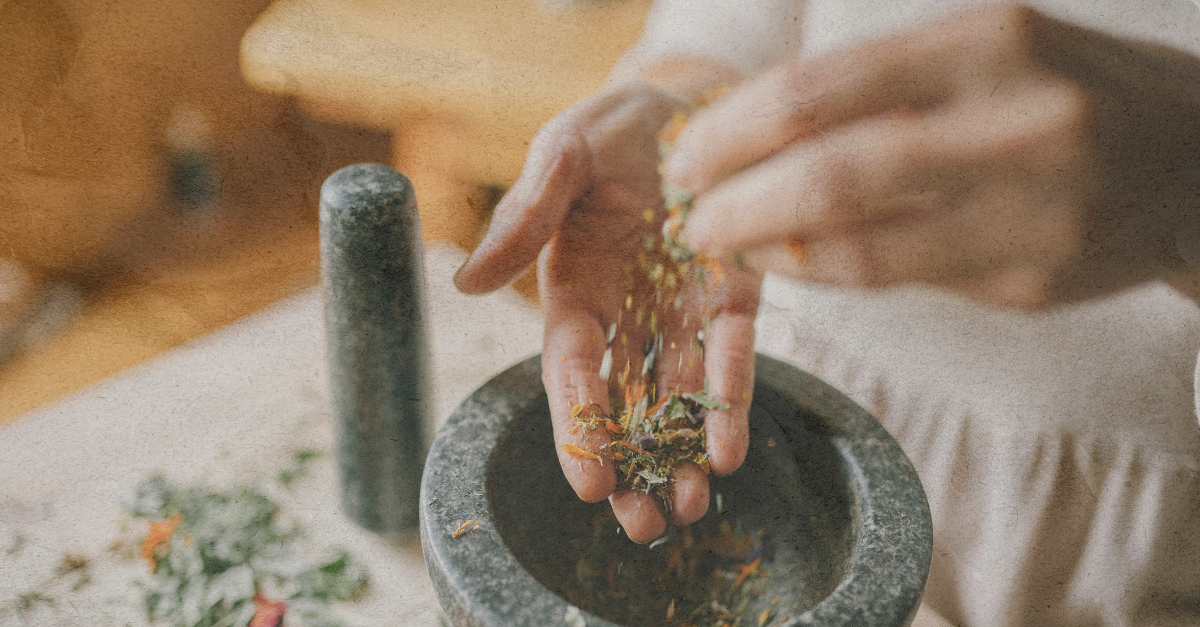
Organ meats were once ordinary, eaten often, and almost always paired with herbs that made them easier to enjoy.
Today, wellness trends are catching up to something traditional cultures have understood for centuries: nutrient density works best when the body actually feels comfortable absorbing it. That balance of power and gentleness is what made these combinations so reliable.
🎧 Prefer to Listen?
Reading’s great, but sometimes it’s nice to just listen in. So we turned today’s blog into a conversation. Our two AI sidekicks, Max and Chloe, break down today’s blog so you can listen on the go!
Organ Meats: Nature’s Most Concentrated Nutrition
If you focus on nutrition, beef liver stands out immediately. It’s rich in vitamin A, B12, copper, riboflavin, and heme iron, which is the form your body absorbs more efficiently. These nutrients come packaged with natural cofactors, which is one reason the body recognizes them more easily than isolated supplements.
This intensity works in your favor, but it can also feel like a lot. Some people notice heaviness or queasiness with high-dose organ supplements. Historically, this is exactly why organ dishes were served with plants that softened the experience.
Why Some People Struggle with Organs Today
Organ meats are dense. They’re biochemically active. When they show up in big capsule stacks or concentrated blends, the body can react with nausea, bloat, or just a sense that things are “too strong.” That’s why pairing them with herbs can help ease some of these unpleasant symptoms—and restore some balance.
Herbs: The Soothing Counterpart
Slippery elm is one of the clearest examples of why organ meats and herbs go well together. Its mucilage can coat and calm the gut lining, helping reduce irritation and bloating. People with sensitive stomachs have used it for generations.
Yarrow brings another layer when paired with organ meats. Reviews published in recent journals highlight its antispasmodic activity and potential to ease digestive tension.
And then there are the classics: peppermint, ginger, fennel. These plants have long histories of helping the stomach settle after richer meals. Together, these herbs make organ nutrients feel steadier and easier for the body to work with.
Why Herbs and Organs Work Better Together
The pairing makes intuitive sense when you look at how each part functions. Herbs soothe the gut lining, which may, in turn, support nutrient absorption. Botanicals like black pepper extract can enhance the bioavailability of specific compounds. Collagen-rich organs provide structural support for the gut, while mucilaginous herbs offer comfort on contact.
Traditional meals reflected this same wisdom. Rich meats were balanced with plants that helped the body process them smoothly. The combination just works.
A Modern Approach That Honors the Same Logic
Sarenova, which leverages these ancestral principles, focuses on gentler doses and thoughtful combinations. Formula No. 06 pairs 100% grass-fed beef organ superfoods with calming herbs like slippery elm, yarrow, and black pepper to provide you with the same benefits our ancestors once enjoyed. Unlike other supplements, your body will respond and use what each pill offers—rather than be overloaded with a megadose.
Join the Formula No. 06 Today
Your body usually tells you what it appreciates. When nutrients show up in forms it can use comfortably—rich, whole-food organ nutrition paired with herbs that steady the gut—it responds with clarity. This way of eating isn’t new. It’s simply a return to patterns that always made sense, supported now by modern research and a deeper understanding of how the gut thrives.
Be first in line to try Formula No. 06 and experience the power of natural herbs and 100% grass-fed beef organs.
💡 Key Takeaways
Organ meats deliver unmatched nutrient density, but their biochemical intensity can overwhelm the gut without proper support.
Traditional cultures solved this by pairing organs with soothing herbs that improved digestion and nutrient absorption.
Modern discomfort with organ supplements isn’t about nutrient quality but about delivery—mega-doses overload the system.
Herbs like slippery elm, yarrow, peppermint, ginger, and fennel create a calmer digestive environment that directly enhances bioavailability.
True efficacy comes from synergy, not force: moderate doses of whole-food organs paired with gut-steadying botanicals are easier to absorb and feel better in the body.
-
(AI-generated conversation and transcript)
[00:00:00] Max: So, uh, today we are diving headfirst into one of nutrition's [00:00:05] great paradoxes.[00:00:05] Chloe: Mm-hmm.
[00:00:06] Max: How to get at the most powerful, concentrated [00:00:10] nutrients that nature offers. I'm talking about organ meats without, you know, the side effects that can turn so many people [00:00:15] away. Right. We're looking at sources that reveal a really old secret.
[00:00:19] Max: This, [00:00:20] uh, pairing idea, a synergy that gives the body profound [00:00:25] power. But also gentleness.
[00:00:27] Chloe: That's a great way to put it. Our sources aren't just a shopping list of [00:00:30] ingredients. They're really an exploration of, of balance.
[00:00:33] Max: Balance, okay. We're
[00:00:33] Chloe: taking a deep look at [00:00:35] these incredibly nutrient dense foods, and then looking at how traditional wisdom actually solve [00:00:40] the main problem with them,
[00:00:41] Max: which is
[00:00:41] Chloe: absorption and just digestive comfort, how to actually [00:00:45] use all that power.
[00:00:46] Max: Okay, let's unpack this then. Organ meats, they're famous for a [00:00:50] reason, but the experience of eating them, especially in like a concentrated supplement form. [00:00:55] Can be a lot.
[00:00:56] Chloe: It can be a challenge for sure.
[00:00:58] Max: So our mission today is to understand [00:01:00] this crucial synergy, how this rich biological load is managed and utilized.[00:01:05]
[00:01:05] Max: We wanna give you the shortcut to being well-informed about a wellness trend that is, well, it's [00:01:10] less about innovation and more about remembering these forgotten patterns.
[00:01:13] Chloe: And if we just start with the raw [00:01:15] facts, the enthusiasm for organ meats is, it's completely [00:01:20] validated by science. They're absolute powerhouses of nutrition.
[00:01:24] Max: And when we look at [00:01:25] beef liver specifically, the data is just. It's striking. It [00:01:30] blows most synthetic supplements outta the water complete. It's just so densely packed with these essential [00:01:35] compounds. We're talking vitamin A, B12, copper riboflavin, and this is [00:01:40] the big one. He iron
[00:01:41] Chloe: and that he iron part is so critical because that's the non plant [00:01:45] based form.
[00:01:45] Chloe: It's the one the body absorbs so much more efficiently than, you know, the non-heme type you [00:01:50] find in a lot of standard iron supplements. It's just, it's ready to use.
[00:01:53] Max: What's fascinating to me here is that the [00:01:55] nutrients. They aren't isolated.
[00:01:57] Chloe: No, and that's the key.
[00:01:58] Max: They come wrapped in these natural [00:02:00] co-factors.
[00:02:01] Max: The whole food advantage, isn't it?
[00:02:02] Chloe: That's the perfect term for it. It's [00:02:05] precisely why your body recognizes it. It knows what to do with that nutrition so much more [00:02:10] easily than when we try to take the same things in their, you know, isolated synthetic forms.
[00:02:14] Max: [00:02:15] Okay. But this is exactly where the paradox kicks in.
[00:02:17] Max: If it's so perfect, why do [00:02:20] people have problems with it? Mm. Our sources get right into this. Mm. They note that even [00:02:25] with this phenomenal density of nutrients, that same concentration can just [00:02:30] feel like. Well, like too much.
[00:02:32] Chloe: Yeah.
[00:02:33] Max: People report things like nausea, [00:02:35] bloating, a sense of heaviness, or just that the supplement is too strong.
[00:02:39] Max: [00:02:40] Especially with those high dose capsules,
[00:02:41] Chloe: and that discomfort isn't just in their heads. It's a direct physiological [00:02:45] response to a massive amount of biochemical activity hitting the system all at once.
[00:02:49] Max: Okay. [00:02:50] Explain that a little more.
[00:02:50] Chloe: Well, think about what the liver does. In a cow. Its job is detoxification and [00:02:55] nutrient storage.
[00:02:56] Chloe: It's a processing hub. Yeah. So when you consume concentrated beef liver, you're [00:03:00] getting a huge spike of compounds, especially those fat soluble vitamins like vitamin [00:03:05] A plus this incredible density of B vitamins and minerals.
[00:03:08] Max: The body has to process [00:03:10] all of that.
[00:03:10] Chloe: Exactly. The body's own systems. Your liver and your gut.
[00:03:13] Chloe: They can get sort of [00:03:15] momentarily overwhelmed trying to deal with that high load. It's like trying to pour a gallon of [00:03:20] thick syrup through a tiny funnel.
[00:03:22] Max: It just backs up.
[00:03:23] Chloe: It backs up. You get a biochemical [00:03:25] traffic jam.
[00:03:25] Max: So the modern approach, which is often about maximal dosing, you know, let's get [00:03:30] the biggest number of IUs into the smallest possible capsule that's actually creating the [00:03:35] problem.
[00:03:35] Chloe: It really is. It prioritizes the quantity you're offering the body over the body's [00:03:40] actual ability to absorb it comfortably.
[00:03:42] Max: So it's not the nutrient quality, it's the [00:03:45] delivery.
[00:03:45] Chloe: Precisely. It's the delivery method and the whole philosophy behind the dosage and [00:03:50] that realization that takes us straight back to traditional wisdom.
[00:03:53] Max: Okay? So if that kind [00:03:55] of density can cause so much discomfort. How did traditional societies who, I [00:04:00] mean they relied on these organs for survival.
[00:04:02] Chloe: Yeah. How
[00:04:02] Max: did they manage it?
[00:04:03] Chloe: Yeah.
[00:04:03] Max: They couldn't have been feeling [00:04:05] sick after every rich meal. Uh,
[00:04:06] Chloe: no, of course not. They managed it because they honored [00:04:10] the idea of balance.
[00:04:11] Chloe: Traditional cultures almost never ate organs in [00:04:15] isolation. Huh? They understood Maybe intuitively that power needs a soothing counterpoint. [00:04:20] So their organ dishes were almost always prepared and served with specific plants, [00:04:25] herbs, and other botanicals that would, you know, soften the experience.
[00:04:29] Max: That immediately [00:04:30] makes me think of like historical dishes.
[00:04:32] Max: You never just see a piece of raw liver on a plate by [00:04:35] itself.
[00:04:35] Chloe: Never.
[00:04:36] Max: I'm thinking of something like, uh, fado, olive, et ciana liver [00:04:40] cooked with tons of onions, and it's often served next to a bitter green like [00:04:45] radicchio or even just the heavy spices used in something like haggett.
[00:04:48] Chloe: That's an excellent [00:04:50] connection.
[00:04:50] Chloe: That is exactly it. The use of all those spices and those bitter or soothing greens, it [00:04:55] wasn't just for flavor. It was a digestive strategy.
[00:04:57] Max: It's functional.
[00:04:58] Chloe: It was entirely [00:05:00] functional. These cultures observed what happened. They thought that pairing these powerful foods helped [00:05:05] ease the common symptoms that heaviness the indigestion, and it just restored a sense of equilibrium in [00:05:10] the gut.
[00:05:10] Chloe: It wasn't some new trick. It was just how it was done. This insight is [00:05:15] so powerful for you, the listener. I mean, if you're someone who is really curious about [00:05:20] nutrition, you want the benefits of Whole Foods like liver, but you've struggled with digestive [00:05:25] issues from those pure concentrated supplements.
[00:05:28] Chloe: This pairing idea [00:05:30] offers a clear, actionable solution and it's rooted in history.
[00:05:33] Max: It really is, [00:05:35] and it connects to why the modern supplement industry abandoned that pattern in the first place.
[00:05:39] Chloe: Yeah. [00:05:40]
[00:05:40] Max: You know, post-war nutrition cut really focused on synthesizing [00:05:45] isolated compounds,
[00:05:45] Chloe: right. The lab code approach.
[00:05:47] Max: Exactly. And maximizing doses to hit [00:05:50] those RDA targets. Forgetting that utilization is often way more important than sheer dose size. [00:05:55] The focus became well. Maximalist rather than utilitarian.
[00:05:59] Chloe: Okay, so that brings [00:06:00] us to the herbs themselves. If we wanna restore this balance, what are the specific [00:06:05] soothing counterparts that the sources mentioned, and what are they actually doing?
[00:06:08] Chloe: What's the mechanism here?
[00:06:09] Max: So we're looking for [00:06:10] ingredients that do a couple of things. Some provide structural support and others calm down the activity. [00:06:15] A primary example is Slippery elm.
[00:06:17] Chloe: Slippery elm. Okay. What's that doing? It contains something [00:06:20] called mucilage. The best analogy is to think of it like a natural protective [00:06:25] balm.
[00:06:25] Chloe: It's this sticky polysaccharide substance that literally coats the [00:06:30] lining of your digestive tract.
[00:06:31] Max: So instead of those dense nutrients hitting a sensitive gut lining, [00:06:35] totally unprotected. The mucilage is like a buffer.
[00:06:38] Chloe: It is the buffer, exactly. [00:06:40] It calms the gut lining, which helps reduce irritation and bloating before you even introduce a [00:06:45] high load food.
[00:06:46] Chloe: People with sensitive stomachs have used slippery elm for [00:06:50] generations for that exact reason. It provides comfort on contact.
[00:06:54] Max: But wait a [00:06:55] second. A question comes to mind. If we're coding the gut lining with this mage, are we [00:07:00] risking slowing the whole digestive process down too much?
[00:07:02] Chloe: That's a great question.
[00:07:04] Max: Is there a chance we could [00:07:05] actually reduce absorption by slowing things down?
[00:07:07] Chloe: It's a very thoughtful and necessary question, and the [00:07:10] source is clarify that, no, that risk is minimal when it's combined with other agents that encourage healthy [00:07:15] motion. This is where the second category of herbs comes in, the ones that focus on movement.
[00:07:19] Chloe: [00:07:20] Tension Euro is highlighted here. Recent journals are pointing to its anti-spasmodic [00:07:25] activity.
[00:07:25] Max: Anti-spasmodic. Hmm. So that means it helps relax muscles, ease, potential [00:07:30] cramping.
[00:07:30] Chloe: Correct. It mitigates those involuntary muscle contractions. So [00:07:35] while the slippery Elm is giving you that protective coating, yaro is gently calming down [00:07:40] any excessive digestive tension or cramping that you might get from a really rich.
[00:07:44] Chloe: [00:07:45] Dense meal. It ensures the whole process is smooth. Not, you know, unnaturally [00:07:50] slowed down.
[00:07:50] Max: Wow. That's, that's really elegant. You have the structural comfort from one and [00:07:55] then this relaxed movement from the other.
[00:07:56] Chloe: It's a great combination.
[00:07:58] Max: And then we have the more familiar names. [00:08:00] The sources also mentioned the classic aids.
[00:08:02] Max: Things like peppermint, ginger, and [00:08:05] fennel,
[00:08:05] Chloe: right? Those are the staples. They have long, long histories of helping the stomach [00:08:10] settle after richer meals, they just further confirm this consistent pattern. If the [00:08:15] food is biochemically dense, the counterplan has to offer this multifaceted support [00:08:20] covering everything from bloating to transit speed.
[00:08:22] Max: So let's get into the synergy mechanics now. [00:08:25] 'cause this feels like the core nugget of this deep dive. This isn't just about taking two separate [00:08:30] pills. It's about a two-way relationship that makes sure those high power nutrients are actually [00:08:35] used.
[00:08:35] Chloe: Absolutely. Think about it. The gut lining is where all the nutrient exchange happens.
[00:08:39] Max: It's the whole [00:08:40] game.
[00:08:40] Chloe: It's the whole game. So when these herbs soothe that lining, creating a calmer, less [00:08:45] irritated environment. That in turn supports optimal nutrient [00:08:50] absorption, a compromise or irritated gut struggles to use even the best nutrition, but a [00:08:55] soothed gut. It's ready to work.
[00:08:57] Max: So a healthier, calmer environment [00:09:00] directly leads to better uptake of those crucial B twelves.
[00:09:02] Max: And that heme iron we were talking about?
[00:09:04] Chloe: Yes.
[00:09:04] Max: The [00:09:05] gentleness facilitates the power
[00:09:07] Chloe: and beyond just comfort, some botanicals are included [00:09:10] specifically for their enzymatic enhancement. The sources point to black pepper extract or ping, [00:09:15] which is famous for its ability to enhance the bioavailability of certain compounds.
[00:09:19] Max: How did [00:09:20] that work exactly?
[00:09:20] Chloe: Pipe brain works by gently inhibiting certain enzyme functions in the gut that might [00:09:25] otherwise metabolize these beneficial compounds too quickly.
[00:09:27] Max: Whoa, okay. That's a critical detail. So the [00:09:30] herbs aren't just making the experience feel better. They are chemically extending the life of the [00:09:35] nutrient in your system, so your body has more time to actually absorb it.
[00:09:38] Chloe: You've got it. It gives the body a [00:09:40] wider window for absorption before it gets cleared out. It completely shifts the paradigm from [00:09:45] trying to force a mega dose. Through a system that's protesting right to ensuring that [00:09:50] the moderate appropriate dose you do take is maximally utilized pairing [00:09:55] density with digestive efficiency,
[00:09:57] Max: which brings us squarely into the modern context.[00:10:00]
[00:10:00] Max: How is this ancestral principle being applied now? Especially for [00:10:05] people who rely on concentrated forms like capsules.
[00:10:07] Chloe: Well, if we connect this to the bigger picture, [00:10:10] we're seeing these ancestral principles being integrated back into modern formulation. The [00:10:15] sources report that a modern approach, and they give the example of a company called ANOVA and their formula no.
[00:10:19] Chloe: [00:10:20] PO B six is leveraging these exact principles. They're rejecting that [00:10:25] maximalist philosophy.
[00:10:26] Max: So instead of trying to create the biggest possible single nutrient punch right. [00:10:30] They're focusing on gentler, more appropriate dosing, coupled with this thoughtful, [00:10:35] utilitarian combination of herbs.
[00:10:36] Chloe: Precisely. The formula is described as pairing [00:10:40] 100% grass fed beef, organ super foods, with that calming support [00:10:45] complex.
[00:10:45] Chloe: We just discussed the slippery elm, yarro, and black pepper. The [00:10:50] entire focus shifts from overwhelming the system to supporting the system's ability to use the [00:10:55] compounds. It's a fully integrated approach.
[00:10:57] Max: That's such a great contrast. The traditional supplement [00:11:00] industry often thinks of nutrition as an engineering problem.
[00:11:02] Max: You know, how much can we fit in this tiny space? [00:11:05]
[00:11:05] Chloe: Mm-hmm.
[00:11:05] Max: But this integrated approach. Treats it like a biology problem. How much can the system [00:11:10] comfortably and effectively use?
[00:11:11] Chloe: And the emphasis on user experience is key there [00:11:15] because if the organ material causes nausea or discomfort, adherence just plummets and then the [00:11:20] nutrients go unused anyway,
[00:11:21] Max: won't stop taking it.
[00:11:22] Chloe: You stop taking it by including [00:11:25] the supportive botanicals. The goal is for the body to respond positively and actually [00:11:30] use what's being offered rather than being overloaded by a mega dose.
[00:11:34] Max: So what does this all [00:11:35] mean for us then? This deep dive reveals that true nutritional efficacy, [00:11:40] it isn't found in some radical, complex biohacking.
[00:11:43] Max: Mm-hmm. It's a simple and [00:11:45] elegant return to patterns that always made sense.
[00:11:47] Chloe: Yeah.
[00:11:47] Max: The body just thrives when it receives [00:11:50] both the power of rich whole food, nutrition and the comfort it needs for smooth [00:11:55] assimilation.
[00:11:55] Chloe: Absolutely. And the body is the final judge. Right. When nutrients show up in forms, it can [00:12:00] actually use comfortably.
[00:12:01] Chloe: This rich whole food organ nutrition paired with gut steadying [00:12:05] herbs. It just responds with clarity and optimal utilization. That integrated [00:12:10] thinking. That's the powerful lesson we can take from these sources.
[00:12:13] Max: We've seen how traditional wisdom dictates [00:12:15] that for true absorption, intensity has to be paired with calm.
[00:12:18] Max: The richest natural [00:12:20] material needs the most soothing natural counterpart to unlock its full potential.
[00:12:23] Chloe: And now just as a [00:12:25] final thought, consider where else in your life, you know, beyond nutrition. [00:12:30] That critical balance of high intensity and soothing support might unlock greater clarity in [00:12:35] utility. Hmm.
[00:12:35] Chloe: Think about how pairing a really demanding mental project with a moment of [00:12:40] intentional calming rest might just be the key to better absorption and repent of knowledge. That [00:12:45] synergy of power and gentleness, it's a principle worth exploring in pretty much every [00:12:50] pursuit.