
Episode 16: Inside Formula No. 06: The Gut-Energy Connection Women Need to Understand
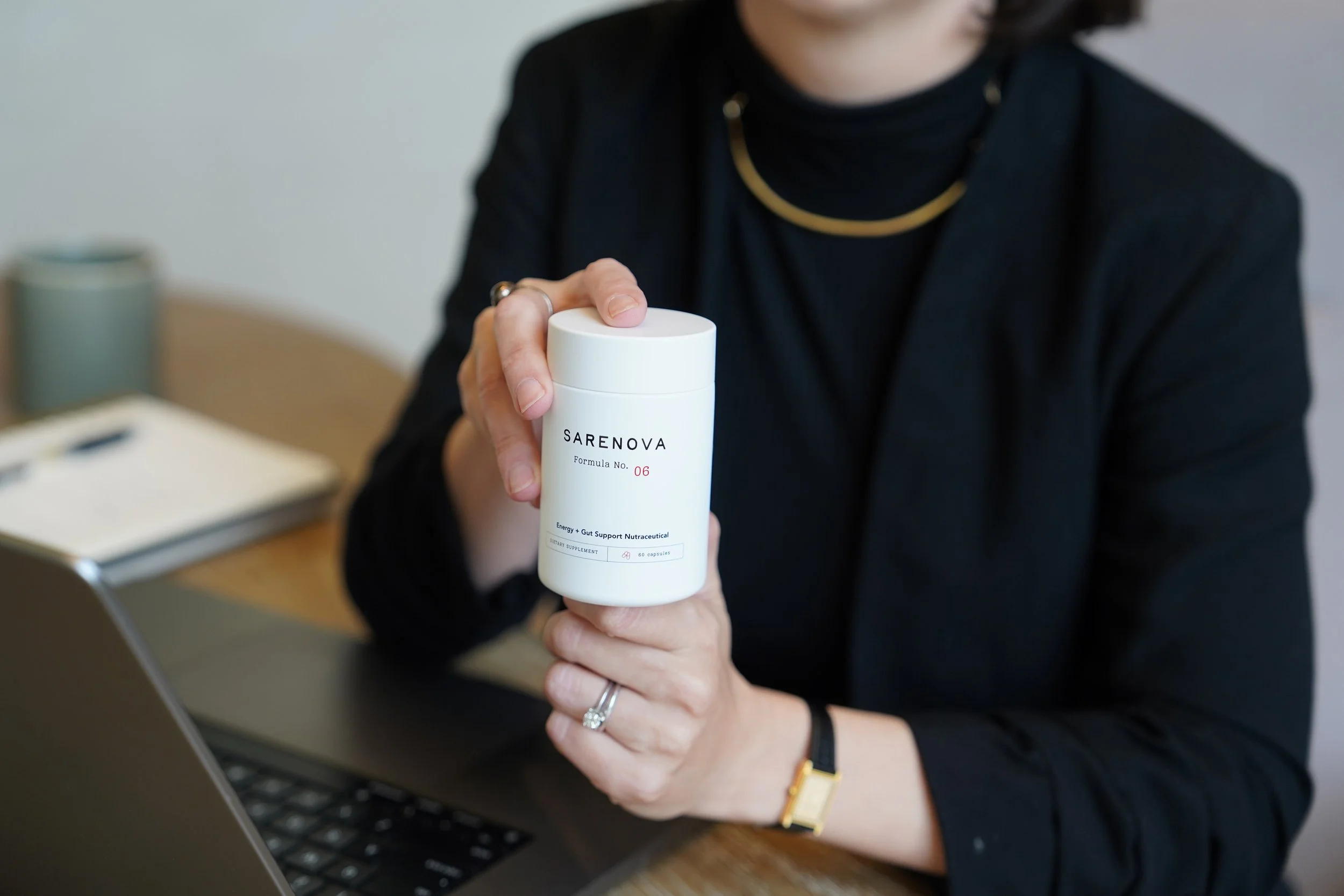
The afternoon crash is not always about sleep, and the bloating is not always about food.
For many women, these two symptoms show up together but get treated like separate problems. More coffee for the fatigue. More probiotics for the gut. More supplements with longer labels and bigger promises.
But the body may be asking a simpler question.
Can it make energy, and can it absorb what it needs to make it?
That is the real conversation inside this episode.
In this episode of Wild Is Wise, Sara Estes takes you inside Formula No. 06, a five-ingredient blend created for women whose energy, digestion, and resilience have started to feel different with time.
Rooted in organ nutrition, Ojibwe plant wisdom, and bioavailability science, this formula was built to support the cellular machinery that produces steady energy and the gut lining that determines what the body can actually absorb.
Sara walks through grass-fed beef liver, beef intestine, slippery elm, yarrow, and BioPerine, explaining why each ingredient earned its place and why a short, honest label can be more powerful than a crowded one.
Listen in to understand why tired and bloated may be one story, and how true replenishment begins when the body finally receives what it can recognize and use.
Key Takeaways
Tired and bloated may be connected
The episode reframes low energy and digestive discomfort as two symptoms that can share the same root. If the body cannot absorb nutrients well, it may struggle to produce steady energy.Energy is produced, not stimulated
Sara explains that real energy support is not about pushing the body with caffeine or quick fixes. It is about nourishing the cellular machinery that helps the body make energy from usable nutrients.Absorption matters as much as ingredients
A supplement is only useful if the body can actually absorb what is inside it. Formula No. 06 is built around both nutrient density and bioavailability, including BioPerine to help raise the absorption ceiling.Shorter labels can be more honest
The episode challenges the idea that more ingredients means a better formula. Sara emphasizes that every ingredient should have a clear purpose, a meaningful dose, and a reason for being there.Ancestral wisdom and modern science can work together
Formula No. 06 blends organ nutrition, Ojibwe plant medicine, and modern research on gut support, inflammation, and nutrient absorption. The takeaway is that nature and science do not have to compete, they can tell the same story.
Research Mentioned
This episode is an educational translation of the following peer-reviewed research. Click any citation to read the original paper.
Harvard T.H. Chan School of Public Health. “Iron · The Nutrition Source.” Reference resource on heme vs. non-heme iron absorption. https://nutritionsource.hsph.harvard.edu/iron/
Nowak D, Jakubczyk E. “The Freeze-Drying of Foods: The Characteristic of the Process Course and the Effect of Its Parameters on the Physical Properties of Food Materials.” Molecules, 2020. PMC7603155. https://pmc.ncbi.nlm.nih.gov/articles/PMC7603155/
Kabeer S, et al. “Dehydration and the Preservation of Bioactive Compounds in Nutrient-Dense Foods.” PMC9998808. https://pmc.ncbi.nlm.nih.gov/articles/PMC9998808/
“Yarrow (Achillea millefolium) Review of Traditional and Modern Uses.” Heliyon, 2023. doi:10.1016/j.heliyon.2023 (S2405844023100491) https://www.sciencedirect.com/science/article/pii/S2405844023100491
Medical News Today. “Slippery elm: Benefits, uses, and side effects.” Reference resource on mucilage and digestive support. https://www.medicalnewstoday.com/articles/slippery-elm
Shoba G, Joy D, Joseph T, et al. “Influence of Piperine on the Pharmacokinetics of Curcumin in Animals and Human Volunteers.” Planta Medica, 1998. The foundational human trial on piperine bioavailability enhancement. https://pubmed.ncbi.nlm.nih.gov/9619120/
Densmore F. How Indians Use Wild Plants for Food, Medicine and Crafts. Smithsonian Institution Bureau of American Ethnology, 1928. Documents Ojibwe traditional plant medicine, including slippery elm and yarrow.
Smith HH. Ethnobotany of the Ojibwe Indians. Bulletin of the Public Museum of the City of Milwaukee, 1932. Documents traditional Ojibwe uses of slippery elm bark, yarrow, and a wide range of native plants.
USDA FoodData Central. Nutrient density data for grass-fed beef liver. Used for the “most nutrient-dense food” reference. https://fdc.nal.usda.gov/
“Organ Meat Nutrient Density and Bioavailability.” PubMed Central, PMC11435426 and PMC11174546. https://pmc.ncbi.nlm.nih.gov/articles/PMC11435426/https://pmc.ncbi.nlm.nih.gov/articles/PMC11174546/
Links Mentioned
Hormones & beef organs: sarenova.com/digest/how-to-naturally-balance-your-hormones-with-beef-organ-superfoods
Do I need beef organs?: sarenova.com/digest/i-eat-healthy-and-take-a-probiotic-do-i-really-need-beef-organs
Freeze-dried bioactivity: sarenova.com/digest/the-bioactive-superiority-of-freeze-dried-beef-organs
Herbs + organs synergy: sarenova.com/digest/why-herbs-and-organs-work-better-together
Organ nutrition for immunity: sarenova.com/digest/your-daily-shield-organ-nutrition-for-immunity
Sarenova Founding Member waitlist: sarenova.com
Wild is Wise podcast archive: wildiswise.com
Follow + Review:
If this episode resonated, follow Wild Is Wise for clips, new episode drops, and extra notes from the show. And if you’re listening on Apple Podcasts, I’d be so grateful if you left a quick review. It helps more women find the show.
Instagram:@wildiswise
TikTok:@wildiswise
Apple Podcasts: Leave a review
-
Sara Estes: 00:01
If you've taken supplements for years and you still feel depleted, like you're tired by noon, foggy by three, you're running on coffee just to hold it together, your body is sending a signal. Most of what's on the supplement shelf isn't built for what women's bodies are actually missing. I know because I spent years looking for something that was, and I couldn't find it. So I built it. And today I'm taking you inside that process. Welcome to Wild is Wise. I'm Sara Estes, a former private investigator who ditched the high-stress legal life after a major health crisis. I rebuilt my health from the ground up through nutrition and functional medicine. And now I'm here to uncover the truth about women's wellness and translate it so you can make informed decisions about your health. On this podcast, we break down women's nutrition and physiology with real research and actionable tips. And here's the core philosophy: what's found in nature is often exactly what our biology is wired to thrive on. We get nerdy with the science, but keep it practical for everyday life. If you're ready to understand what your body actually needs, you're in the right place. As always, this podcast is educational, not medical advice. Please talk to your healthcare provider before making any changes. Let's jump in. On this podcast, I don't usually talk about what I'm building. Today is different. I'm talking about something I've spent the last year building, which is crazy to think about, but it has been an entire year since I started this project. It is a women's wellness brand called Sarenova, and our first formula is called Formula No. 06. This is the first time I've brought it to this show, and I wanted to do it properly. Not as a pitch, but as an explanation of what I've been working on. Before I take you inside the formula, I want to tell you who I built this for and what problem it solves. For years before I started formulating this, I had been keeping track of what I kept hearing from the women in my life. Friends, friends of friends, women on the other end of phone calls or long online conversations. The same two complaints kept coming up almost always. First was an energy fade, this steady, slow kind of fade that started somewhere in the mid-afternoon and didn't really quite resolve, no matter how much sleep, no matter how many green powders, no matter how clean their diet was. It was this low-grade depletion that their labs just kept calling fine. The second was digestion that just stopped feeling normal, bloating that really didn't match the meal that they just had before, a morning gut that felt like a stranger compared to the gut that they remembered from their 30s, an ambient kind of inflammation that they had just learned to live with and just call it fine. I started digging into the research. I started reading and I started talking to practitioners I'd been working with on my own body. Both lanes of research kept landing in the same place. Tired and bloating is one problem, not two. Formula No. 06 is what I built for both of them in the same capsule. Here's the fix. Formula No. 06 is an energy and gut support nutraceutical built for women in their 40s, 50s, and 60s whose bodies, somewhere in the last decade, started running on a different fuel and a different gut than the one it had 10 years ago. What it's doing is feeding two systems at once. The cellular machinery that actually produces your energy, not stimulates it, but produces it, and the digestive lining that decides how much of any food, any nutrient, any supplement your body can actually absorb. Think of it like this: there's no point stocking a pantry if the stove is broken. And there's no point fixing the stove if there's nothing in the pantry. A lot of supplement formulas in this category do one or the Formula No. 06 stocks the pantry and steadies the stove at the same time. And that's why it exists. It's the daily floor that a woman can build her next decade on top of. There are five ingredients inFormula No. 06. Two of them are organ superfoods, two are plants from my Ojibwe heritage. One is a black pepper extract that does a single very specific job. And together they amount to about 1,100 milligrams of active material per daily serving. The supplement aisle has shelf after shelf of bottles with 20 ingredients on the labels. I went the other direction with five ingredients, each one defended in the formulation room, each one earning its dose for a reason that I can name out loud. This episode is what is actually in the capsule and why each of those five ingredients was chosen. The reasoning is very specific. Here's the philosophy I started with. A formula is only as honest as the math on the back of the package. If an ingredient is on the label in a dose so small that it could not work in any human study, that ingredient is decoration, not nutrition. I wanted nothing decorative in this formula. So I built it backwards from the question: what does a woman's body in the season where it's getting the most depleted actually need in usable form? The answer came down to four things. The body needs raw nutrient density it can recognize paired with a gut environment that can actually absorb it. It needs plant medicine for the digestive and inflammatory load that women carry. And it needs one ingredient whose job is to raise the absorption ceiling on the other four. So that came down to five total ingredients. Every one of them earned its place. And I'm gonna walk you through them in order. For that whole food nutrient density, we chose beef organ superfoods, and that needed two different beef organ types to achieve what we were trying to do. Let's look at the liver first. The first ingredient on the label is 100% grass-fed freeze-dried beef liver at 400 milligrams per serving. Beef liver is one of the most nutrient-dense foods on the planet. Nutritional biochemists have called it that for decades across consistent rankings with no reason to care about supplement marketing. Grass-fed beef liver carries one of the highest concentrations of preformed vitamin A in the human food supply, alongside bioavailable B12 in its active cofactor form, copper, choline, and the full B complex in the ratios biology has been arranging since long before agriculture. Why 400 milligrams? Because at that dose, paired with the rest of the formula, you're getting a meaningful daily contribution of bioavailable B12 alongside a stack of cofactors the body uses to produce cellular energy without crossing into the territory where dose becomes too dense for the gut to enjoy. 400 milligrams of freeze-dried beef liver concentrates roughly two grams of fresh liver. The dose is concentrated but not crushing. Now, why grass-fed? Because the nutrient profile of a liver is downstream from the soil and the grass the animal lived on. A grain-fed feedlot liver will give you the macronutrients on paper. It will not give you the macronutrient density and the fat profile that grass-fed and pasture-raised animals carry. And why freeze-dried? Because heat is brutal on B vitamins, fat-soluble vitamins, and the protein matrix that makes an organ recognizable to your body. Freeze-drying removes water at low temperature and preserves roughly 90 to 97% of the original nutrient content. Older organ supplements were heat-dried and they didn't deliver what the whole organ meat delivers. Beef liver is the foundation of this formula. That second ingredient is 100% grass-fed freeze-dried beef intestine at 200 milligrams per serving. This one I had to defend more than once during formulation. Beef intestine is less famous than beef liver, of course. The biological case for it is strong. Beef intestine carries a mucosal lining rich in glycine, in collagen-building peptides, and in the same nutrient profile your own gut uses to repair itself daily. The principle in traditional nutrition is plain. If you want to support a tissue, eat the same tissue. It's the notion of like supports like. So if you want to support your intestine, you want to eat that same organ. The protein structure your gut is rebuilding is the protein structure beef intestine arrives carrying. I added it because the same pattern shows up everywhere once you start looking. In the research, in women's health communities, in the conversations I've been a part of for years, a digestive system running on inflammation they had learned to ignore. Bloating that didn't match what they ate, a morning gut that didn't feel like the gut they remembered. The conversation about gut health in women's wellness has been dominated by probiotics for nearly a decade now. And probiotics are useful for what they do. Your gut lining, though, is built out of glycine and collagen-building peptides. A microbe community can't supply those raw materials on its own. Beef intestine arrives carrying both. So why 200 milligrams? That's gonna be half the dose of the beef liver. Because at this ratio, the beef intestine delivers gut repair amino acids alongside the liver's nutrient density without overwhelming the formula. The two organs together account for 600 milligrams of the daily serving. The formula carries plenty of density, but it's still gentle enough to take with breakfast or lunch. The third ingredient is slippery elm bark, olmus rubra, 350 milligrams per serving. And here's where the formulation gets personal. I am Ojibwa. The plants of my heritage have been used for generations for the same purposes I'm putting them in this capsule for. Slippery elm bark in traditional Ojibwa and broader Anishinabe medicine has been used for digestion, for sore throats, for soothing inflamed tissue for generations. The chemistry is finally catching up to what my heritage has known for centuries. Here's what that chemistry looks like: the bark contains a compound called mucilage. The mucilage is a soluble fiber that turns into this soft, soothing gel when it meets water in your gut. And that gel coats and calms the digestive lining. And the modern research is consistent with that traditional use. Slippery elm has been studied for digestive comfort, for cough and throat irritation, and for general tissue soothing across the herbal medicine literature. So why 350 milligrams exactly? Because the gut soothing job in this formula is large. Two organ powders are sitting in the same capsule. Some women take dense organ supplements alone and feel the heaviness in their stomach for hours. Slippery elm at this dose forms a gentle gel that softens the landing of the organs and supports steady absorption rather than the spiky, slightly heavy feeling that organ-only supplements have been known for. Slippery elm is the largest single herb dose in the formula because it's doing the largest job of any of the herbs. The fourth ingredient is yarrow, Achillea milfolium, 150 grams of a 10 to 1 aerial extract per serving. Now I want to dig into this because I think this is so interesting and it's really important to know the difference between the yarrow flour and what the aerial extract is. Yarrow is the second plant from my Ojibwa heritage in this formula. It's been used in traditional Anishinabe medicine for inflammation, for slow healing wounds, fevers, and for the cyclical complaints that women have been bringing to herbalist for generations. The ethnobotanical record is very well documented. The plant has been doing the work the whole time. Now, the math on the dose, because the way the supplement industry uses yarrow on labels is misleading. And I want you to know the difference. A 10 to 1 extract means 150 milligrams of concentrated extract that's built from approximately 1,500 milligrams of raw yarrow herb. So while the label reads 150 milligrams, the active compound load in your capsule is the equivalent of about one and a half grams of raw yarrow. That distinction matters. A lot of supplement brands are going to list a one-to-one whole plant powder at 150 milligrams and call it the same yarrow dose. What yarrow brings to the formula is anti-inflammatory and antispasmodic activity. Antispasmodic, basically, if we break it down, means that it helps calm tight, cramping, smooth muscle in the gut and in the reproductive tract. A 2023 review in the journal Helion cataloged Yarrow's anti-spasmodic effects across more than a dozen studies. The science is mapping onto what my heritage already knew. And I love it. Now, the fifth and final ingredient is biopyrine, a standardized black pepper extract at five milligrams per serving. Standardized to 95% piperine. That's the active compound. This is the smallest ingredient by milligram, and it's the only ingredient in the formula that isn't delivering nutrition directly. Its entire job is making sure that the other four actually get absorbed. Piperine has been studied across multiple human trials for its effect on bioavailability, which is the percentage of what you swallow that actually makes it into your bloodstream. When piperine, that black pepper extract, is paired with fat-soluble vitamins, with curcumin, with B vitamins, with selenium, it raises the absorption percentage meaningfully. Five milligrams is the dose that has been validated in the published biopyrian clinical literature for that effect. So I didn't want to over-include it. The job is precise and the dose is precise. So five active ingredients, that is the whole formula on the panel. The second half of the formulation story is what's not in the capsule. You'll see on the label made without fillers, hormones, antibiotics, GMOs, preservatives, pestides, toxins, synthetics, gluten, seed oils, added sugars, or sweeteners. That list is not just a marketing flourish. This list is what we said no to during formulation on purpose for reasons. Now, no fillers because fillers are how supplement companies make a small ingredient list look like a big one. No seed oils because the inflammatory profile of industrial seed oils has been clear in the literature for years. No sweeteners because the women I build this for read the label and they notice. No synthetic isolates because the entire point of building a whole food formula is the matrix. And dropping a single isolate next to a whole food complex undermines the whole architecture. No gluten because a digestive support formula has no business sneaking gluten in. The list of exclusions is as much of a formulation choice as the list of inclusions. Every milligram you just heard is printed on the back of the bag. It's not hidden inside a proprietary blend total. It's not obscured behind a combination name. Every ingredient, every dose is right there in plain numbers. That was a choice, and it was not the safe one. There is a lot of risk by putting the numbers on the label. And let me tell you why. When you publish your exact doses, competitors can copy your formula ingredient for ingredient. Essentially, anyone who wants to go source the same inputs and build it themselves, they can do that. So there's some risk, which is the reason why companies say that they put their formulas in proprietary blends. Now, that's what they say, but here's the real reason a lot of brands use proprietary blends. And that is because a proprietary blend lets you list an ingredient without disclosing how much of it is actually in there. It's legal, it's common, and it's how brands put an expensive ingredient on the front of the label at a dose that is way too small to matter. And they charge you for the impression of it. But when your ingredients are on the label in the exact milligrams, there's nowhere to hide if your doses are too small to do anything, which is exactly why most supplement brands don't do that. Because what they're doing is they're saving money by just sprinkling in a tiny bit of an expensive ingredient and then putting that as the hero on the label. So I do not believe in that. I don't like that. And I don't like knowing exactly how much of an ingredient I'm putting in my body. So my values at Sarenova is I believe that you deserve to know the exact amount and exactly what you are taking so that you can make informed decisions on whether or not this is working for you and how to adjust. I'm using therapeutic doses of ingredients that cost real money to source at this quality. And showing that on the label also means that I can't quietly reduce a dose to protect margin and hope nobody notices. It means that I'm accountable to those numbers every single time. Different brands in the supplement industry, under that proprietary blend, they will over time reduce the amount of an expensive ingredient in favor of some of the filler or less expensive ingredients. And the label doesn't have to change. So you think you're getting the same product, but really you're getting a very different product than you might have gotten before and you never know about it. So I don't love that. I'm taking a stand against it and I'm showing you exactly what's in the product at the risk of people trying to copy it. But my belief is that if I build this brand and if I do it the right way, that I'm going to be able to help people. And that's my goal and that's what I care about. I chose that accountability on purpose. You deserve to know what you're putting in your body and exactly how much of it. That is not a marketing position. It is the only way I was willing to do this. Okay, some practical notes before I close. Take the capsules with food if you can. The capsules can be taken really at any time, but I like to recommend taking them with food, ideally, a meal that has some fat in it. And here's why. The fat-soluble vitamins in beef liver, like vitamin A and the carotenoids in particular, absorb meaningfully better with fat in the meal. So eggs, butter, avocado, full-fat yogurt, any of those will do. Also, if you pair the capsules with a vitamin C source, a wedge of orange or a few strawberries, a glass of, you know, fresh squeezed juice, vitamin C supports mineral absorption and helps the digestive environment do its work. Now, I would say avoid stacking the capsules with your morning coffee or tea. The tannins in coffee and black tea bind to several of the minerals in the formula and reduce how much of them your body picks up. It's not dramatic, but it's just a little pointer that you may want to keep in mind. So I would wait around an hour after your morning cup of coffee if you drink coffee. And finally, give it time. Nutrient density definitely doesn't feel like some pre-workout stimulant. It feels like a steadier afternoon, a less punishing cycle, a slightly lower ambient hunger for a coffee at three o'clock in the afternoon. The shifts are very real and they're not loud. Give it at least six weeks before you judge it. Three months to feel the ground shift. That is what the formula is built to do. Okay, so that is the formula. Two grass-fed organs, two plants for my Ojibwa Heritage, one absorption helper, two capsules a day. You get a 30-day supply, and this is made in an FDA registered GMP certified facility in the United States. I went top tier partnering with the very best manufacturer possible. And it's all third-party tested, non-toxic, no heavy metals, all of that good stuff. The wait list, I'm so excited. The wait list is open at sarenova.com and founding member pricing locks for life for anyone who joins before we actually launch. So you want to get on that wait list. The story of Formula No. 06 in one breath is this. I started with the plants my heritage already trusted, and then I added the organ superfood nutrition that the supplement aisle had been skipping for 50 years. I added one absorption helper to make sure that the rest of the formula actually lands, and I left out everything that was not earning its place. Replenished by nature is the line on the bag. It was not chosen by some focus group or a branding agency. It is the description of what the formula is doing, ingredient by ingredient. The plants do their work, the organs carry the matrix, piperine raises the absorption ceiling, and the dignity of a short ingredient list that a woman can read once and remember holds the whole thing together. Alright, that is it for this episode of Wild is Wise. Thank you so much for listening. As always, if this episode gave you a clearer picture of what's actually in the bottles that women are being sold, I want you to share it. One friend who's still trying to make sense of a 20 ingredient label. She is exactly who this is for. Until next time, stay wild, stay wise. I'll see you next week.
Frequently Asked Questions
Q: Who is Formula No. 06 for, and what does it actually do?
Formula No. 06 was created for women whose energy, digestion, and resilience have started to feel different with time. The afternoon crash that doesn't resolve. The bloating that doesn't match the meal. The supplements with longer labels and bigger promises that have not held. The formula was built to support the cellular machinery that produces steady energy and the gut lining that determines what the body can actually absorb. Many women describe noticing a steadier afternoon and a less-punishing cycle around the six-week mark, with a clearer ground at three months.
Q: What are the five ingredients in Formula No. 06?
Formula No. 06 contains 100% grass-fed freeze-dried beef liver, 100% grass-fed freeze-dried beef intestine, slippery elm bark, yarrow as a 10:1 aerial extract, and BioPerine black pepper extract standardized to 95% piperine. The serving size is 2 capsules daily and each bag contains a 30-day supply.
Q: Why do the afternoon crash and the morning bloat keep showing up together?
Because they are often the same problem expressed in two different organs. The cellular machinery that produces your energy depends on cofactors — B12, copper, choline, the B-complex — to do its work. The gut lining decides whether those cofactors actually reach the bloodstream from the food you eat. When the gut is inflamed or compromised, absorption drops, and the energy production downstream drops with it. Tired and bloated is one upstream story. Formula No. 06 was built to address both halves of the loop.
Q: Why is yarrow listed as a 10:1 extract instead of a whole-plant powder?
A 10:1 extract concentrates approximately 1,500 mg of raw yarrow herb into 150 mg of finished extract. That distinction matters. A 1:1 whole-plant yarrow powder at the same milligram weight would deliver a much smaller active-compound load. The 10:1 ratio was chosen so the active-compound delivery in each serving meaningfully matches the doses studied in the published yarrow literature.
Q: Why pair slippery elm and yarrow with organ nutrition?
Dense organ nutrition is powerful but can sit heavy in the stomach without support. Slippery elm forms a soothing mucilage gel that softens the landing of the organs. Yarrow contributes anti-inflammatory and antispasmodic activity that calms the smooth muscle of the gut.
Both plants come from Sara's Lac Courte Oreilles Ojibwe heritage with documented traditional use across Anishinaabe medicine. The pairing is heritage and science working together, and it's why most women tolerate Formula No. 06 without the historical roughness of organ-only supplements.
Q: Why BioPerine at only 5 mg?
BioPerine is the smallest ingredient in the formula by milligram and the only one whose job is to raise the absorption ceiling on the other ingredients rather than work directly on the body. Five milligrams of BioPerine, standardized to 95% piperine, is the dose validated in the published clinical literature for measurable bioavailability enhancement of fat-soluble vitamins, B vitamins, curcumin, and selenium. More is not better here; the dose is precise on purpose.
Q: Are the beef liver and beef intestine grass-fed and freeze-dried?
Yes. Both organ ingredients are 100% grass-fed and freeze-dried. Grass-fed sourcing matters because the nutrient profile of an organ is downstream of the soil and the grass the animal lived on, and freeze-drying preserves roughly 90 to 97 percent of the original nutrient content. Heat drying degrades B vitamins, oxidizes fat-soluble vitamins like vitamin A, and breaks down delicate peptides. Freeze-drying preserves the matrix.
Q: How and when should I take Formula No. 06?
Take 2 capsules daily with food, ideally a meal that contains some fat for fat-soluble vitamin absorption. Pair with a vitamin-C source such as a wedge of orange or a few strawberries to support iron uptake. Avoid stacking with your morning coffee or black tea, since tannins bind iron; wait about an hour around your morning cup. Many women describe noticing a steadier afternoon and a less-punishing cycle around the six-week mark, with a clearer ground at three months.
Q: What does “made without” mean on the Formula No. 06 bag?
Formula No. 06 is made without fillers, hormones, antibiotics, GMOs, preservatives, pesticides, toxins, synthetics, gluten, seed oils, added sugars, or sweeteners. The exclusion list is a formulation choice, not a marketing flourish. The Vanilla Mint Essence on the front of the bag is a faint natural flavoring, not a sweetener. The formula is manufactured in an FDA-registered, GMP-certified facility in the United States and is third-party tested.Prefer to Watch on YouTube?