
Episode 09: The Meal Formula for Steady Energy and Hormone Balance
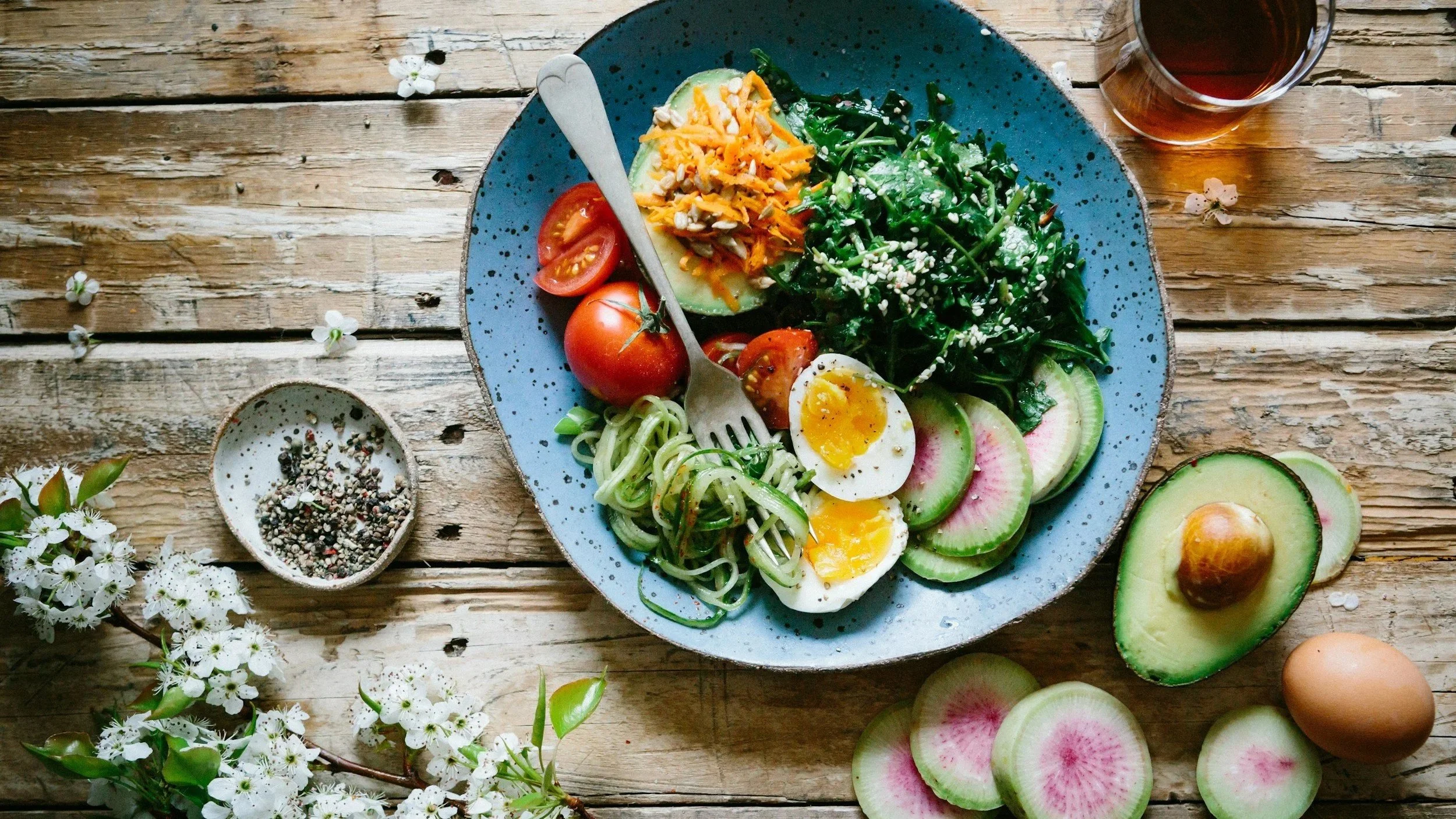
Most women have been told to “eat better” for their energy and hormones.
So they try.
More greens, more protein, maybe a multivitamin on the counter.
And yet the afternoon crash still hits, brain fog lingers, and the advice online only seems to get more confusing. One expert says cut carbs. Another says eat more fiber. Supplements promise quick fixes, but somehow nothing really seems to move the needle.
The real frustration isn’t lack of effort. It’s the lack of clear guidance about what eating well actually looks like at a real meal.
If food truly affects your gut, hormones, and energy, what should actually be on your plate?
In this episode of Wild as Wise, Sara Estes breaks down a simple framework she calls the Wild is Wise Plate.
Drawing from nutrition research and evidence-based food patterns, Sara explains the 5 building blocks that help support the body’s key systems at every meal: protein with power, fiber and color, healthy fats, gut and liver helpers, and small tweaks that improve nutrient absorption.
With practical examples and grounded science, this episode shows how building a thoughtful plate can support steadier energy, stronger digestion, and more balanced hormones.
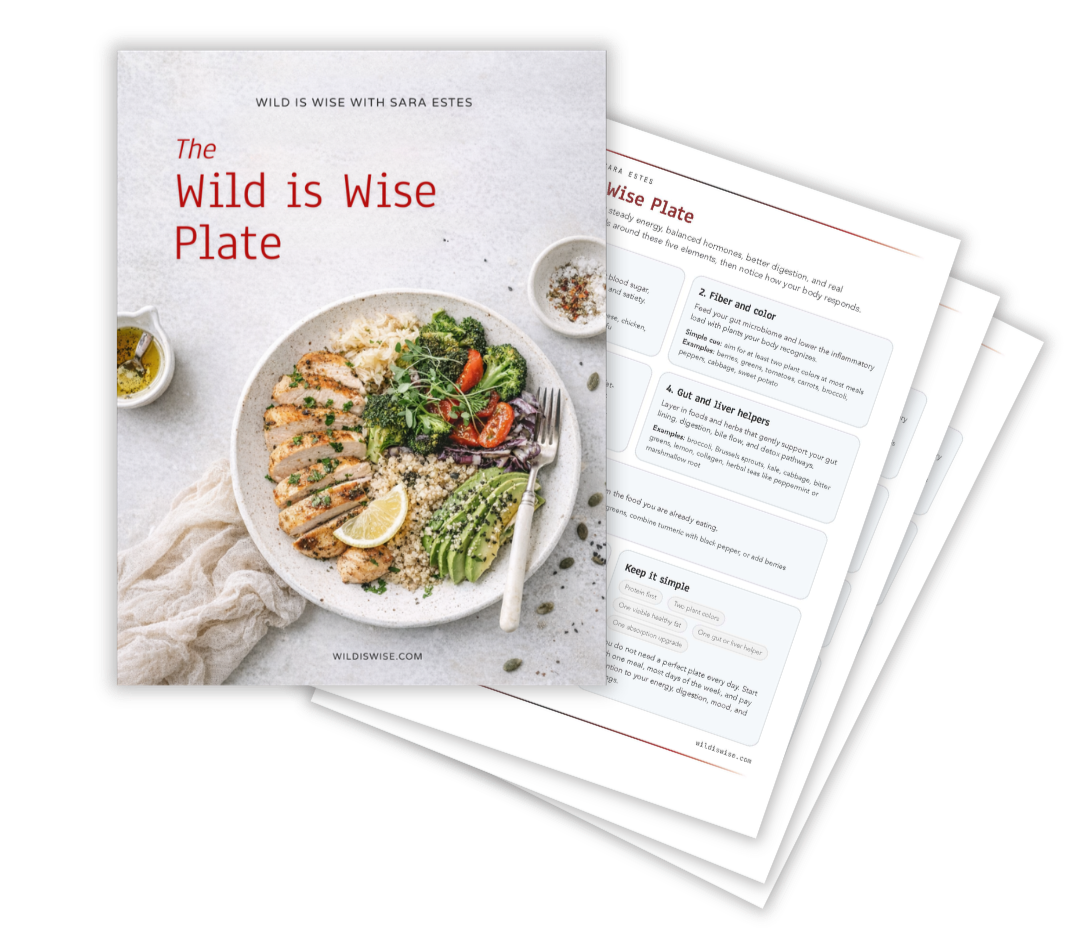
Download the free Wild is Wise Plate guide below. ↓
It’s a simple one-page PDF that breaks down the five building blocks Sara shares in this episode to help you create meals that support steady energy, balanced hormones, and better digestion.
Follow along:
Instagram: @wildiswise
TikTok: @wildiswise
Subscribe + Review
If this episode resonated, please follow Wild Is Wise and leave a quick review on Apple Podcasts. It helps more women find these conversations and gives the show momentum in the early days. Thanks for listening. See you next week. 🎙️
-
Ep. 09 - The Meal Formula for Steady Energy and Hormone Balance
[00:00:01] Speaker : Most women have been told at some point to eat better for energy and hormones, and most women try. They add more greens, they bump up that protein, they grab a multivitamin off the shelf, and they still end up in the same spot wondering why nothing is actually moving the needle. Here's what I've come to understand, both from my own health journey and from the research I've gone deep on through the Harvard Nutrition Program and working one-on-one with certified nutrition practitioners health coaches and functional medicine practitioners.
[00:00:28] The gap is almost never effort. The gap is usually information, specifically, what does eat better actually look like at a meal level, and how do supplements fit in without becoming a substitute for the real thing? That is what we're answering today. Welcome to WILD IS Wise. I'm Sara Estes, a former private investigator who ditched the high stress legal life after a major health crisis. I rebuilt my health from the ground up through nutrition and functional medicine
[00:00:59] Speaker 3: and now I'm here [00:01:00] to uncover the truth about women's wellness and translate it so you can make informed decisions about your health. On this podcast, we break down women's nutrition and physiology with real research and actionable tips, and here's the core philosophy, what's found in nature is often exactly what our biology is wired to thrive on. We get nerdy with the science, but keep it practical for everyday life. If you're ready to understand what your body actually needs, you're in the right place.
[00:01:26] As always, this podcast is educational, not medical advice.
[00:01:30] Please talk to your healthcare provider before making any changes.
[00:01:33] Speaker 3: Let's jump in.
[00:01:34]
[00:01:36] Speaker 7: Before we get into the actual food, I wanna give you the why first, because the research here is genuinely compelling, and I don't want you to take my word for alone. One One of the things that landed hard for me in the nutrition program that I took was learning about a tool called the Alternative Healthy Eating Index, or A HEI.
[00:01:53] It's essentially a scoring system that measures diet quality based on how closely someone's eating aligns with the [00:02:00] evidence-based patterns. The research behind it is pretty striking. A large study involving roughly 71,000 women and 41,000 men found that people who scored higher on the A HEI had about a 19% lower risk of chronic disease overall, including a 31% lower risk of coronary heart disease and a 33% lower risk of diabetes. That's compared to people with lower scores. A separate study of about 70,000 people found that high A HEI scores had about a 25% lower risk of dying from any cause and more than a 40% lower risk of dying from cardiovascular disease. That is not a small effect, and what matters most about this research is that none of it points to a single super food or a single nutrient.
[00:02:45] The A HEI rewards overall patterns like whole foods, quality, proteins, vegetables, fiber, fruits, healthy fats rather than any one magic ingredient. That distinction matters a lot for how we think about eating. So today's [00:03:00] episode is really answering the question I've heard underneath Almost every wild is wise episode so far.
[00:03:04] Okay, I get it. The gut, the liver, the immune system, the perimenopause conversation. What do I actually eat? Here's the context I want you to bring to this. Over the past several episodes, we've covered a few big ideas. Your gut is doing far more than processing food.
[00:03:19] When you feed it fiber, your gut bacteria ferment that fiber into short chain fatty acids like butyrate, and those compounds actually fuel your cells and help your mitochondria run more efficiently. Then we've got your liver, which is running over 500 background processes at any given time,
[00:03:35] managing energy storage and release processing fats and cholesterols, helping clear hormones and handling toxins from food, medication, and your environment. Your immune system is built from actual nutrients like vitamin A, D, C, B, vitamins, zinc, copper, selenium, iron, and when those aren't coming in or they aren't being absorbed,
[00:03:56] your immune cells can't do their jobs and in [00:04:00] perimenopause, the shifts in estrogen and progesterone can slow digestion and change how well you absorb things like iron and B12, which is part of why fatigue and brain fog can feel so persistent and so different in that phase.
[00:04:14] When we look across the research on women's health, the pattern is consistent. Diets built around whole foods, quality, protein, colorful veggies and fruits, high fiber carbs, and healthy fats.
[00:04:25] Those tend to support more stable blood sugar, better energy, and more balanced hormones than ultra processed patterns that are high in sugar and low in fiber, in protein.
[00:04:34] And increasingly clinicians and researchers looking specifically at perimenopause are recommending that many women need more protein than they've been told. Often closer to one to 1.2 grams. Per kilogram of body weight per day, which translates to roughly 25 to 30 grams of protein at a meal.
[00:04:52] So rather than hunting for a hormone food, or a gut food, I want you to think about your plate as a small ecosystem. Every meal [00:05:00] is an opportunity to give your gut, your liver, your hormones, and your immune system what they each need at the same time. And that's the idea behind what I call the wild is wise plate.
[00:05:09] Let me walk you through the five building blocks, and I wanna be clear upfront. We're not weighing food, we're not tracking macros. We're talking about a way of looking at your plate and asking five simple questions. The five categories are protein with power, fiber and color, healthy fats, gut and liver helpers.
[00:05:28] And tiny tweaks that upgrade absorption. I'll walk you through each one and then we're gonna put them together into real meals. Let's start with protein, with power. Protein isn't just for people who lift weights. It's the raw material for almost everything. Your muscles, your enzymes, your neurotransmitters, and many of your hormones.
[00:05:46] For women, especially in midlife, getting enough protein at each meal, not just scattered across the day, can support steadier blood sugar, better energy and less muscle loss over time, that 20 to 30 grams per meal target is a [00:06:00] practical benchmark that more and more clinicians are pointing to on your plate.
[00:06:03] Protein with power might be eggs, Greek yogurt, or cottage cheese. It might be chicken, Turkey, or fish. I always try to go organic when possible. it might be grass fed beef or bison, or if you're plant-based, it can be lentils, beans, tofu put together in a way that doesn't leave you relying mostly on bread and pasta for the bulk of your calories.
[00:06:23] There's another piece of this worth naming, especially if you struggled with fatigue or low ferritin levels. Heme iron is the form found in animal foods like beef, liver, organ meats,
[00:06:33] and it's absorbed at much higher rates , than the non-heme iron that's found in plants. \ Your body recognizes and processes it far more readily. That's why a smaller serving of heme iron can sometimes shift ferritin levels and energy much more than a larger amount of plant iron.
[00:06:50] For women with periods heavy bleeding or a history of anemia, finding realistic ways to bring heme iron into the week through red meat, organ meats, or a well-designed [00:07:00] organ-based supplement might make a real difference in how you feel.
[00:07:02] So when I say protein with power, I mean enough protein to support your muscles, your hormones, and to keep you full. And when it makes sense for you, sourcing some of that protein from heme, iron rich foods.
[00:07:14] The second building block is fiber and color. If protein is your scaffolding, fiber and color are what your gut microbiome runs on, and your first line of defense against chronic inflammation. When you eat fiber from vegetables, fruits, and whole grains, your gut bacteria fermented into those short chain fatty acids we talked about.
[00:07:33] Those compounds feed the cells that line your colon. They help maintain your gut barrier and they contribute meaningfully to your daily energy. Production
[00:07:40] Color is a practical shortcut. The different pigmentations in plants, the deep purple and berries, the orange and carrots, the dark green and leafy vegetables come from compounds that act as antioxidants and they help regulate inflammation.
[00:07:54] So a simple rule, a simple rule I love is to try to see at least two different plant [00:08:00] colors at each meal. That could be leafy greens and cherry tomatoes, blueberries and chia seeds, roasted carrots and broccoli or peppers, and avocado. If roughly half of your plate is some combination of vegetables and fruit, you're giving your gut microbes and your immune system something real to work with. The third building block is healthy fats.
[00:08:19] Hormones don't exist in a vacuum. Many of them are synthesized from cholesterol and fatty acids. Your brain tissue is largely fat. Every single cell in your body has a fatty outer membrane, healthy fats, support hormone production.
[00:08:33] They help you absorb fat soluble vitamins like A, D, E, and K, and they support mood and brain function and slow down how quickly a meal hits your bloodstream, which means steady energy and fewer crashes on your plate. That might look like an avocado, a small handful of nuts or seeds.
[00:08:51] Fatty fish like salmon or sardines or real grass fed butter in reasonable amounts rather than ultra processed seed oils. Now I wanna share [00:09:00] something personal here that I don't see talked about enough.
[00:09:02] I had my gallbladder removed during my fertility journey right at the beginning and at the time, nobody really explained what that meant for how I digest fat going forward. I was basically told I didn't need it and to lay off spicy foods for a couple weeks and then just go about my business. What they didn't explain is that your gallbladder stores concentrated bile and releases it in a coordinated wave.
[00:09:25] When you eat fat, once it's gone, bile just drips more slowly and continuously in your intestine instead of arriving in a big coordinated surge with your meal.
[00:09:34] For some women, that means large, high fat meals can cause nausea, loose stools, or greasy stools. Not because the fat is inherently bad, but because there simply isn't enough bile arriving at once to break it all down the solution isn't avoiding fat altogether.
[00:09:49] It's smaller, more consistent portions, pairing fats with plenty of fiber, and for some people using targeted bile like ox bile supplements or other digestive support under the [00:10:00] guidance of a practitioner. So if you've had your gallbladder removed or you've noticed fat digestion feels like a weak link in your system, this building block may need a little more personalization for you than it does for someone whose bile system is fully intact.
[00:10:13] The goal isn't drowning your food and fat. The goal is an intentional, visible source and an honest accounting of what your digestion can actually handle. The fourth building block is gut and liver helpers. This is where all the episodes we've done on the gut and liver converge into a single practical question, what's in this meal that's actively supporting those two organs?
[00:10:34] For the gut, two things that stand out consistently. First, collagen and gelatin. These provide amino acids like glycine and proline that support the structural integrity of your gut lining. Research using these models that mimic intestinal tissue has shown that collagen based membranes support support a stronger barrier, which aligns with what clinicians observe when people consistently eat collagen rich foods. Second soothing herbs. Plants like slippery elm, [00:11:00] marshmallow root, Yaro, ginger, peppermint, and DGL licorice .
[00:11:03] Have a long history of use for calming, irritated digestion, and modern research is beginning to confirm anti-inflammatory and protective effects of several of them. For the liver, I want you to think cruciferous vegetables, broccoli, Brussels sprouts, kale, cabbage, which contain compounds that support the liver's detox pathways.
[00:11:22] Bitter greens and citrus can gently support bile flow and keeping a realistic eye on alcohol. Ultra processed foods and unnecessary chemical exposures gives your liver that breathing room to do its hundreds of jobs without getting backed up.
[00:11:36] On an everyday plate, this might be as simple as including some cooked cruciferous vegetables and a few raw greens, stirring in a scoop of collagen into a morning drink,
[00:11:46] or ending the evening with a cup of gut soothing herbal tea. Something like dandelion tea, peppermint tea, or yaro You don't need a complex protocol. You just need a couple of consistent helpers showing up most days.
[00:11:57] And the fifth building block is [00:12:00] tiny tweaks that upgrade absorption. This is where we get into bioavailability. One of my genuine favorite rabbit holes from the Harvard program because it reveals how much the small stuff matters.
[00:12:11] Two practical examples you can start using right now. First, vitamin C and iron. Vitamin C helps convert iron into a form that's easier for your gut to absorb and helps prevent it from oxidizing to quickly. Pairing steak with bell peppers or lentils with lemon juice and fresh herbs is a genuinely smart nutritional decision, not just a flavor combo.
[00:12:33] Second black pepper compounds in black pepper. Slow down how quickly certain nutrients are broken down or cleared from the body, which increases their bioavailability. This is why you consistently see Black Pepper paired with turmeric in both the research and in supplement formulas and those little drinks that you can get at Health food stores. A squeeze of lemon, a handful of berries or fresh ground pepper might seem inconsequential, but across hundreds of meals,
[00:12:59] those small [00:13:00] decisions add up to meaningfully better absorption from everything you're already eating.
[00:13:04] Let me make all of this concrete. Now I'm gonna walk you through three example meals. These are not rules, these are just illustrations. Swap in whatever versions make sense for your taste, your culture, and your schedule.
[00:13:16] Let's start with breakfast, specifically. A breakfast that doesn't set you up to crash by mid-morning. Picture this, two whole eggs plus two extra egg whites, scrambled in avocado oil or butter with a side of sauteed spinach or cherry tomatoes, and a bowl of mixed berries, a spoonful of Greek yogurt on top of that.
[00:13:36] And if you want a scoop of collagen stirred into your coffee or tea, here's what's happening on that plate. The eggs and Greek yogurt give you a solid protein foundation to start the day. The spinach, tomatoes, and berries.
[00:13:47] Bring color, vitamins and fiber. And the fat, from the egg yolks and the cooking fat. Support your hormones and keep you satisfied.
[00:13:55] The collagen goes to work on your gut lining and there's an absorption upgrade in the background. [00:14:00] You're pairing iron containing greens with vitamin C from the tomatoes and berries, for my women in perimenopause, trading a coffee and muffin morning for something like this can make a noticeable difference in energy and focus for the rest of the morning.
[00:14:13] Now let's look at lunch, one that feeds your gut and your liver at the same time, I want you to picture a simple bowl. You've got a base of mixed greens and shredded cabbage, grilled chicken, Turkey, tofu, or salmon. On top half a cup of roasted sweet potato or cooked quinoa.
[00:14:30] A spoonful of sauerkraut or another fermented vegetable if you tolerate it. And a dressing of olive oil and lemon juice with a sprinkle of pumpkin seeds and freshly ground pepper.
[00:14:41] So what's happening on this plate? Your protein comes from whatever you choose for the top, that chicken, Turkey, tofu, or salmon, whichever one your fiber and color comes from, the greens, the cabbage, and the sweet potato or quinoa.
[00:14:55] I especially love the dark red quinoa for this. Your healthy fat comes from the olive [00:15:00] oil and the seeds your liver gets support from the cruciferous cabbage and the lemon the sauerkraut brings in a live fermented food if you can include it.
[00:15:08] These are really, really good for your gut and your absorption tweaks come from the lemon and the pepper. Your gut microbes get a variety of fibers to ferment.
[00:15:17] Your liver gets what it needs, and you don't have to overthink it. for dinner. Here's a meal that is designed to support your hormones and actually help you wind down.
[00:15:25] Think something like grass fed beef or bison burgers, or another heme iron-rich protein alongside a big side of roasted Brussels sprouts or carrots tossed in olive oil.
[00:15:34] A small serving of mashed potatoes or rice cooked in bone broth, and a cup of gut soothing herbal tea after dinner. So maybe that's marshmallow root. Dandelion slippery or a blend that you might find. So what's happening on this plate?
[00:15:46] The protein and the heme iron from the beef support ferritin and red blood cell production,
[00:15:51] which feeds directly into energy and cognitive clarity. The roasted vegetables give you fiber and color. The cooking fat gives you a healthy fat source. [00:16:00] The brussel sprouts support your liver
[00:16:02] and the herbal tea at the end of the evening is a small act of care for your gut and your nervous system. As you wind down, if you layer that with something like grounding even for five or 10 minutes outside with bare feet on the earth, you're stacking nutrition, gut support, liver support, and nervous system regulation, all in the same evening, instead of pulling on just one of those levers.
[00:16:23] Now let's get honest about real life. There will be weeks, probably a lot of them where your plate looks, nothing like these examples. Maybe you're traveling or you're kids are sick, or you're in a launch or a deadline
[00:16:34] or you're just exhausted from cooking and you need to eat something quick. This is where I think supplements genuinely earn their place, not as a replacement for food, but as a safety net and a shortcut when the gap between what you need and what you're actually eating is a little wider than usual. The right questions to ask yourself are, what are the consistent gaps in my actual eating life?
[00:16:54] What am I struggling to get from food regularly? Where does my body need extra support right [00:17:00] now? Is it gut, iron, immune function, perimenopause symptoms? If red meat and organ meats are rare in your week and your ferritin tends to run low. A heme based or organ based iron supplement is more practical than trying to force sliver and onions into your rotation three times a week.
[00:17:17] For most of us, that is just not gonna happen. If you never have time for bone broth or slow cooked meats a quality collagen product can stand in as a consistent way to support your gut and connective tissue and if you're not gonna brew custom herbal teas every night.
[00:17:33] A formula that includes gut soothing herbs like slippery elm and Yaro, gives you support in a reliable, easy format.
[00:17:41] And then we come back to bioavailability because the form of the nutrients matters. How well they're absorbed, how they're combined. Protein with gut support, gut support with absorption, helpers, all that matters.
[00:17:52] And that's the philosophy behind everything I believe about nutrition, bioavailable nutrients, gut soothing plants, and thoughtful absorption support. [00:18:00] All designed to work with the food you eat, not instead of it when the wild is wise, plate is your foundation.
[00:18:05] For most days, supplements become genuinely powerful allies, when they're your only strategy, you're working a lot harder for a lot less. I wanna leave you with something you can actually do this week. A simple experiment for the next two to four weeks.
[00:18:20] Pick one meal of the day, just one breakfast, lunch, or dinner. Whichever one feels the most realistic for you at that meal most days of the week. Build yourself a wild is wise plate. Start with protein. Aim for something in that 25 to 30 gram window. If you can add fiber and color, try for at least two different plant colors on your plate.
[00:18:40] Make sure you can point to one visible source of healthy fat. Include one gut or liver helper. That might be a cruciferous vegetable a serving of collagen or a cup of herbal tea, and when it's easy add one absorption, upgrade lemon juice berries, or fresh ground pepper.
[00:18:55] Then simply pay attention. How is your energy in the hours after that meal? Are you [00:19:00] reaching for sugar or caffeine? Less? What's happening with digestion? If you're in perimenopause or menopause, or any of the hormone shifts, are you noticing any shifts in your mood, your sleep, or your brain fog?
[00:19:11] You do not need to track this in an app. A few notes on your phone or a journal is plenty. The goal isn't a perfect plate every single day. That's just not realistic for the vast majority of us, the goal is partnership with your own body, showing up consistently and paying attention to what happens.
[00:19:28] If this episode was useful and you want something. You can keep in your kitchen. I'm working on a simple one page, wild is Wise Plate Guide that maps out these five building blocks with example foods. You'll be able to grab it@wildiswise.com. I'll put the link in the show notes. Food can feel nourishing, grounded, and realistic. And when supplements are layered on top of that kind of foundation with intention, they can finally do the work you actually hoped they would.
[00:19:58] All right. That is all for this [00:20:00] episode of WILD IS Wise. Thank you so much for listening. Again, I hope you found this helpful. I hope that it's useful for your daily life. Until next time, stay wild, stay wise. I'll see you next week.
[00:20:11]